
Hidalgo County Traffic Warrants Explained
An officer hands you a citation with a date to respond or appear. Miss that date, or leave a final judgment unpaid, and the issuing court can begin FTA or capias process. The labels and remedies differ from one Hidalgo County court to the next, so track down the actual municipal or JP case before treating a ticket as settled. The warrant rides along with that file. Neither Go2Gov nor a state license system adds up to a complete county warrant list. The judge or clerk can tell you what comes next: an appearance, payment, a payment plan, a hearing, bond, or a talk with a lawyer.
A Citation Can Move From Ticket to Capias
The usual path runs from citation to missed response or hearing, then an FTA entry, then a warrant or capias pro fine depending on the case posture. Skipping a court date is not the same as failing to pay a final judgment. Pharr treats a missed appearance as grounds for a capias pro fine; Edinburg draws a line between its arrest warrant and a capias that follows a judge's payment order. The issuing court stays in control of the case even when DPS gets a report that touches license renewal. A payment plan or a voluntary appearance may be open to you. Terms hinge on the court and the judgment. Texas Chapter 45A holds the justice and municipal court procedures.
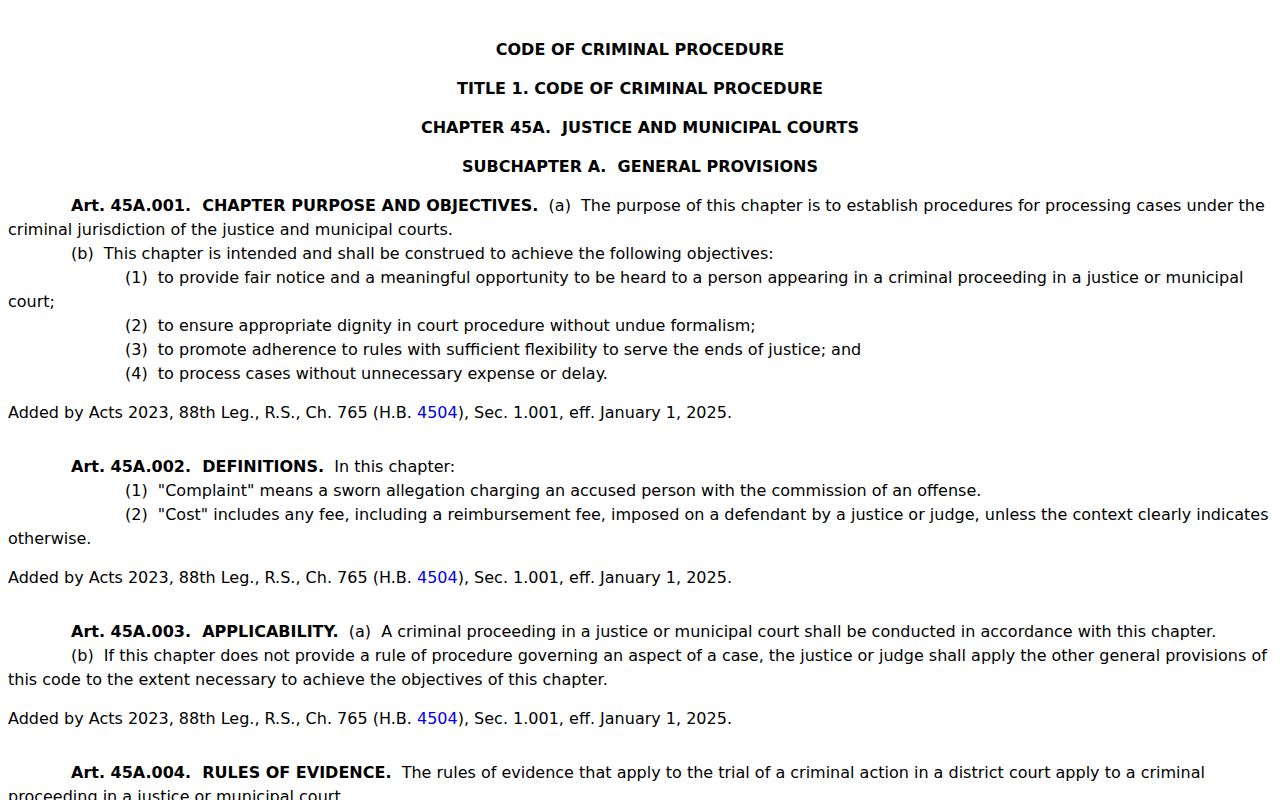
That statute lays out the capias process and its hardship provisions. Ask the local Hidalgo County court how it fits your citation.
Checking for a Traffic Warrant
A traffic case in Hidalgo County can run through several channels. Begin at the city or JP court printed on the citation, then use the matching online payment or case route. The JP/ScoffLaw portal covers listed JP places and participating municipal courts, and it warns that it may not show all unpaid cases. So a blank result does not prove there is no warrant. Call the court to ask about warrant status and appearance rules. Edinburg lists a warrant line; McAllen confirms pending city-warrant details if you give a full name and birth date. A written record request goes to the court or police office holding the file, not automatically to Open Government.
| Route | What it covers | Hidalgo County contact |
|---|---|---|
| JP and ScoffLaw | Participating JP or city cases and online payment | Choose the place, then call its listed JP |
| Municipal court | City ticket, ordinance, Class C, or capias | City court clerk or warrant line |
| County Records Inquiry | Criminal docket, jail, and bond categories | Use only for the named case level |
| Written request | An existing record, subject to access limits | Issuing court or proper records office |
| DPS FTA/FTP | Reported compliance and license renewal status | Contact the court to confirm warrants |
JP and City Courts Keep Separate Tickets
Hidalgo County has nine JP places, and its cities each run their own municipal courts. A Weslaco municipal citation never becomes a JP 1.1 case just because both offices sit in Weslaco. A Pharr ticket stays with Pharr Municipal Court, while a county precinct citation may belong to JP 2.1 or 2.2. Check the issuer, the location, and the court number on the citation to find the right counter. For a city ticket, the municipal warrant page compares city-court channels. For a county JP ticket, the county directory lists each place and its phone.
Inside a Traffic Warrant Record
A municipal or JP docket can show the citation number, court, offense, judgment, FTA fee, service fee, amount due, and the current process label. Search fields vary. No countywide warrant-number format is published, so a citation number is the safer key when you have one. A payment screen may quote a balance yet stay silent on whether a judge appearance is required. Ask the court to confirm that point, and ask whether a receipt clears only the amount or also the warrant.
| Number | Citation number, format varies; use the number printed on the ticket. |
|---|---|
| Court/place | The municipal court or JP place assigned to the citation. |
| Process | FTA, arrest warrant, capias, or capias pro fine as the judge labels it. |
| Balance | Fine, cost, and any court-specific referral or service fee. |
| Next step | Appearance, payment, plan, hardship review, bond, or other court instruction. |
Pharr Forms Collect Case Details
Pharr's official court question form asks for a name, phone, birth date, and citation number if known, plus a written question and an image of a driver license with an updated address. It is a court-contact channel for your own matter, not a public search page. Send personal documents only through the city's official secure process. If the issue is a city citation, call the Pharr municipal court and ask what it needs before you submit anything. The police department and the court share an address in Hidalgo County but keep different records.
How to Pay or Lift a Traffic Warrant
Call the issuing court before you pay anything. Ask for the current amount, whether a judge appearance is required, and what options exist if the full balance is out of reach. Edinburg offers payment plans to qualifying defendants; Mission's warrant clerk takes payment-plan, community-service, or hardship paperwork. Edinburg's local page lists date-dependent OmniBase, Scofflaw, and collection referral fees, and Pharr adds a $50 service or processing fee when an officer served or processed a warrant. Those are city-specific examples, not a Hidalgo County fee schedule that fits every case.
Go2Gov warns that payment can take one to two business days to post while an arrest warrant remains enforceable. Keep the receipt and ask the court when it will update the case.
Edinburg Programs Have Specific Dates
Edinburg announced an annual amnesty from February 23 through April 30, 2026, for eligible Class C cases, with payment-plan options and waived FTA charges for voluntary participants. Its September 18, 2026 Mobile Outreach Docket offered an in-person resolution event and promised no arrest during that program. Those dates have passed. They show a local option, not a standing countywide rule. Check the official Edinburg warrant page for the current policy before relying on any safe harbor.
Traffic Warrants, FTA, and License Holds
A traffic warrant is an order in one court case, nothing broader. Miss a court date or skip a fine in Hidalgo County, and the court may report that failure, which can block Texas license renewal under Transportation Code Chapter 706. DPS handles those reports and says to contact the reporting court, since it cannot tell you whether a warrant exists. The state FTA status route covers reported violations and compliance only. It is not a list of every traffic warrant in Hidalgo County, and Texas DPS describes the failure-to-appear and failure-to-pay program on its own page.
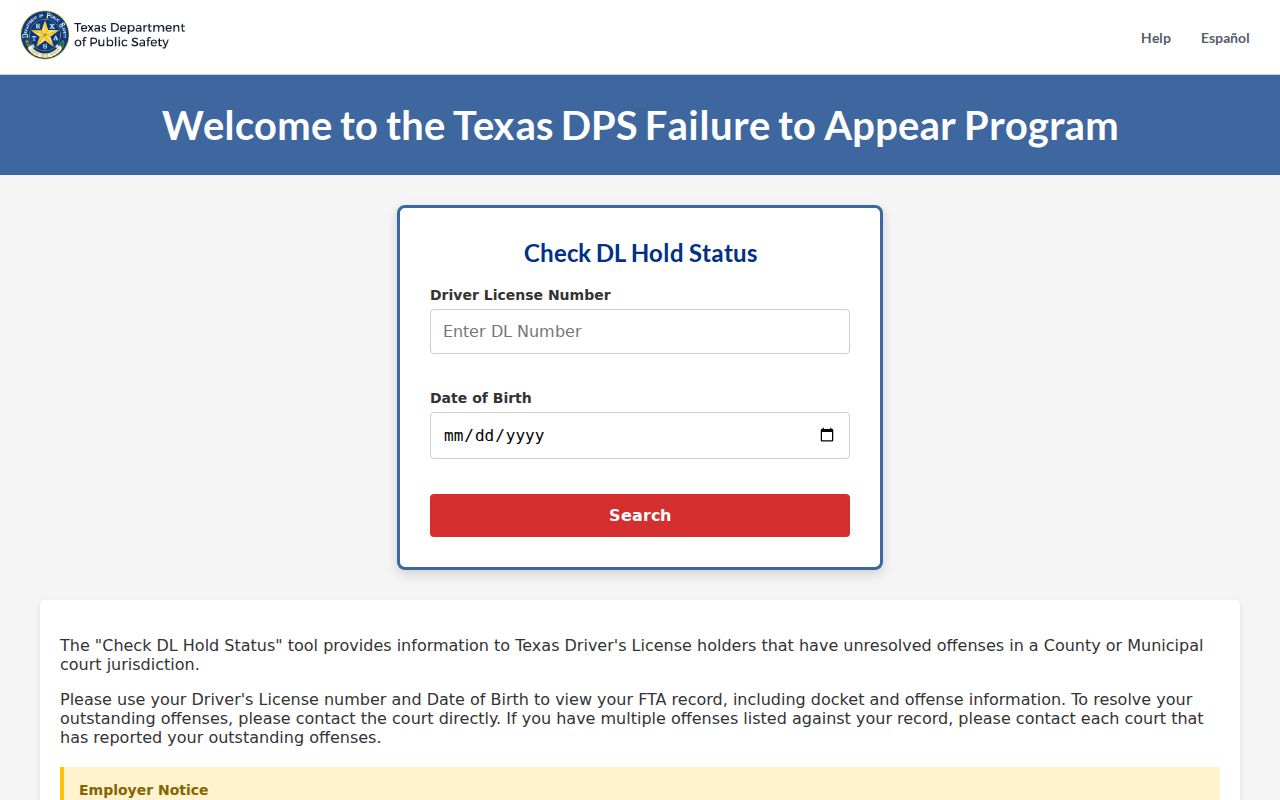
Ask the Hidalgo County court first, then use the state channel to track a reported license-renewal issue.
| Record | What it answers | Who confirms it |
|---|---|---|
| Traffic warrant | Whether court process remains open | Issuing municipal court or JP |
| FTA/FTP report | Whether a court reported a compliance event | Reporting court and DPS |
| License renewal status | Whether the state shows a reported hold | DPS after court reporting |
Keep Proof After Court Clearance
Keep your paper. Save the filed receipt, payment-plan order, bond paper, or signed recall. Then ask the issuing court three things: when its own docket updates, whether it reports compliance to DPS or Scofflaw, and which office confirms the warrant itself. Those clocks run separately. For a DPS report, the state says driver records may take three to five business days to reflect court compliance. That lag is just a record update, not proof a Hidalgo County warrant still stands. If the status still looks wrong after that, call the court.